September 24, 2026 · 6 min read
How preventative maintenance extends AC life and stops peak-season breakdowns
Around Greater Houston your air conditioner doesn't get much of a break. From late spring into early fall most homes run cooling hard. The runtime is long, it's hot outside, and the indoor coil spends hours pulling water out of humid air. That's just this climate. The problem is asking a system to do all that when nobody has cleaned the filter, checked the drain, or caught the worn electrical part before it gives out on the hottest afternoon of the year.
So here's the honest version for homeowners. What peak season does to equipment, what a maintenance visit actually does, and where DIY should stop and a tech should take over. We won't quote you made-up savings percentages or promise a certain number of years. It's just what we see in attics and on equipment pads.
Why Houston summers are hard on neglected systems
Runtime is the first problem. A system that cools nearly every day for months piles more hours on the compressor, blower and outdoor fan than the same equipment would see somewhere milder. Heat is the second. Your outdoor unit is trying to dump heat while it bakes in full sun on a roof or a slab. Then there's humidity. All the water the coil pulls out has to go down a drain, and once algae and dust get in there, drains clog.
None of that means your equipment is doomed. It means skipped maintenance shows up as weak airflow, iced coils, tripped float switches, dead capacitors and “warm air from the vents” calls, usually right when every contractor in town is booked. If one of those has already hit you, that's an AC repair call. Peak season doesn't create those failures so much as finish off the ones that were already on their way.
What a maintenance visit actually does
A good visit follows a checklist. It isn't a sales call. Mostly we're protecting airflow, heat transfer and drainage, plus the electrical parts that take a beating from starting and stopping all day.
- We check the filter size and condition, and make sure the return isn't starving the blower for air
- We inspect the indoor and outdoor coils, and clean them when dirt is clearly hurting heat transfer
- We clear the condensate drain and make sure it's flowing, so the pan doesn't overflow or trip a float switch mid-afternoon
- We look over capacitors, contactors and connections, the parts that fail under load and leave you stranded
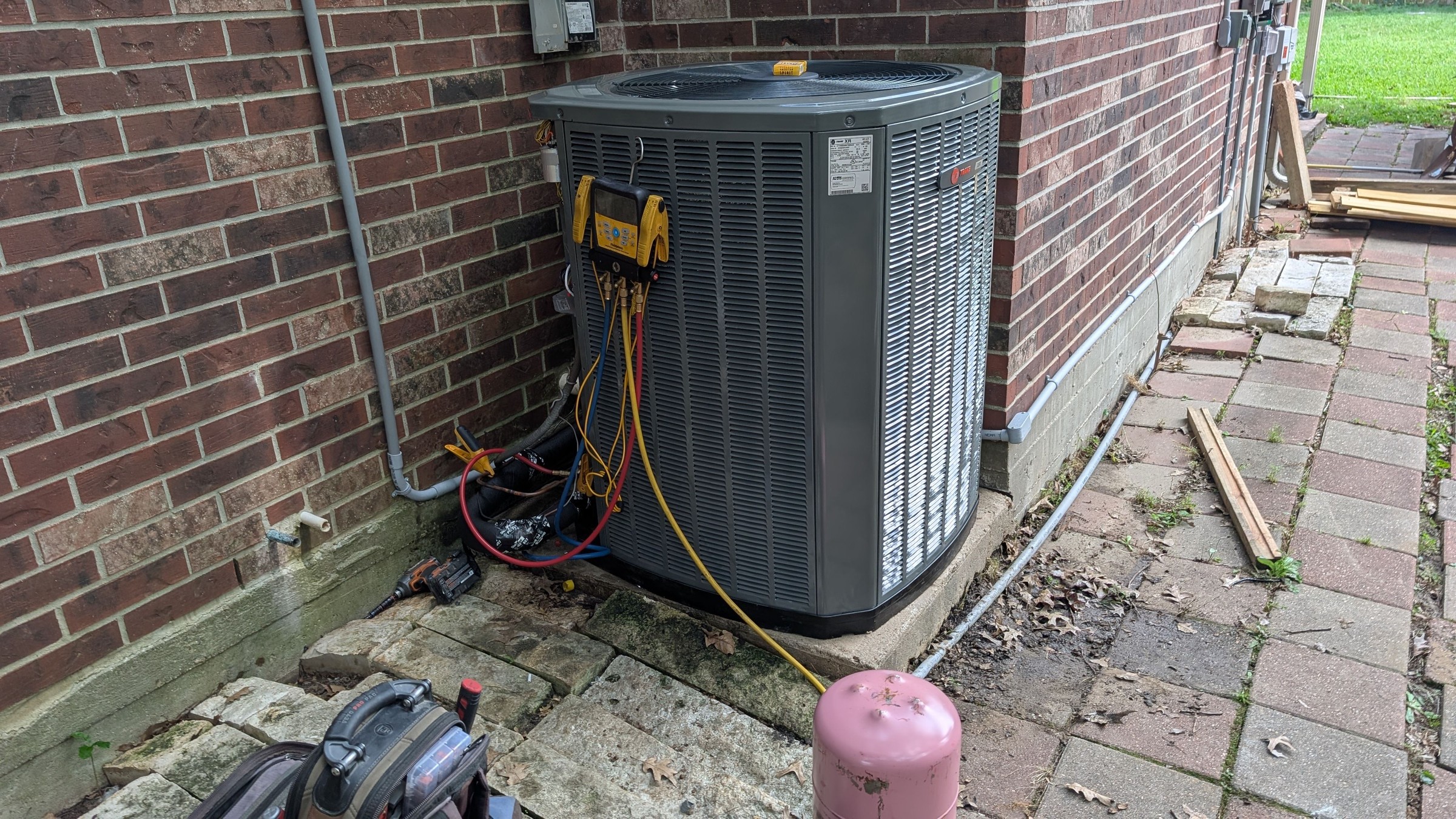
- We do gauge and temperature checks to catch an undercharge or an airflow problem. Topping off freon out of habit isn't part of it.
We also write down what we find. For members, that's nameplates, filter size and baseline readings, which gives the next visit real numbers to check against. Weak parts get caught early, air keeps moving, heat keeps transferring, and next time we aren't starting from scratch.
Why it pays off
Keep the air moving and the coil won't freeze. The compressor won't be fighting a choked system either. A clear drain means no water in the house and no float switch shutting you down on a full pan. And a weak capacitor or contactor found in April costs less, and is way less stressful, than the same part dying at 4 p.m. on a 98° Saturday.
Stack that up over a few years and it's worth more than any one repair. Compressors and blowers wear out faster when a system can't breathe, can't drain or struggles to start, so the less time it spends like that, the better. You'll still replace a system when age and cost say it's time, and we'll be honest with you about when that is. But you get more good seasons out of what you already own, and fewer days with a hot house in the middle of a Houston summer.
What you can do, and what to leave to us
Homeowners should handle the easy jobs that come up often. The full checklist is a job for a tech.
- On your end, change filters as often as your home actually needs (every 30–60 days is common around here) and keep the returns and supply vents open. If you can get to the drain and you're comfortable doing it, go ahead and clear out any standing water or algae you can see.
- We handle everything else. Coils get cleaned if they need it. We check the electrical parts that wear out, do the refrigerant checks (safely), and test the float switch and the full drain path. Then we write down how the system ran under load.
Changing filters is good. But if that's all that ever happens, and nobody checks the drain or the outdoor coil, you've done the cheap third of the job. Summer will find the rest. And if you never change filters and count on a yearly visit to fix everything, you'll still freeze coils and cook blowers in between. You need both.
If you'd like us to handle it
If you want maintenance visits on a schedule, one in spring for cooling and one in fall for heating, with member pricing when something does break, that's what Velocity Care is for. Plan details and pricing are on the membership page.
Take a look at the plans on our Velocity Care page, or call (832) 589-0813 and ask for Velocity Care. We're Class A licensed (TACLA153648C). We'd much rather catch the weak part in spring than meet you in August with a warm house.
From all of us at Velocity Air A/C & Heating