
September 30, 2026 · 5 min read
Switching from AC to heat: a fall checklist for Houston homes
Before the first cold front, change the filter and run the heat on a mild day. Set the thermostat to HEAT, 3–5° above room temperature, and make sure you get warm air, normal sounds and a normal shut-off. Open up the vents and returns, clear around the outdoor unit, and book your fall heating visit early. A brief dusty smell is normal. An electrical or gas smell is not.
Why Houston heaters fail on the first cold night
Your heater has probably been sitting since late winter. Dust settles on the heat strips and burners, thermostat batteries run down, and a summer storm can leave a breaker off without anyone noticing, since the AC has been doing all the work.
Then a front comes through, the temperature drops fast, and half of Houston turns on the heat the same night. A lot of no-heat calls turn out to be a thermostat setting, a breaker or a clogged filter. This checklist is how you catch those on a mild afternoon instead of at 9 p.m. with the house getting cold. If yours has already quit, here's what to do if your heat goes out in a cold snap.
1. Start with a fresh filter
A filter that loaded up all summer makes the first-heat smell worse and chokes off airflow, and on electric heat strips that can mean overheating. Many Houston homes need a new filter every 30–60 days, so if you can't remember the last change, it's due. Match the size printed on the frame of the old one.
2. Thermostat to HEAT and a mild-day test run
Pick a mild day before you actually need heat. Switch the thermostat from COOL to HEAT and set it 3–5° above the current room temperature. Then watch and listen for a few things.
- Warm air at the vents once the system gets going
- Normal sounds, with no grinding, banging or loud rattling
- A normal shut-off once the house reaches the setting
- Fresh thermostat batteries, if yours takes them
- Smart thermostat? Make sure the schedule didn't slip back to “away” and it isn't stuck in cooling-only mode
Leave it alone until it hits the setting and shuts off. Then put it back wherever you normally keep it.
3. Vents, returns and the outdoor unit
Take a lap around the house. Any supply registers you shut over the summer, open them back up. Then look at the return grilles, because a couch, a rug or a stack of boxes in front of one will choke the airflow. Got a heat pump? The outdoor unit handles the heating as well. Pull the leaves and grass clippings off it, and move whatever's stacked up against it so air can get through the coil.
4. Gas furnace or heat pump?
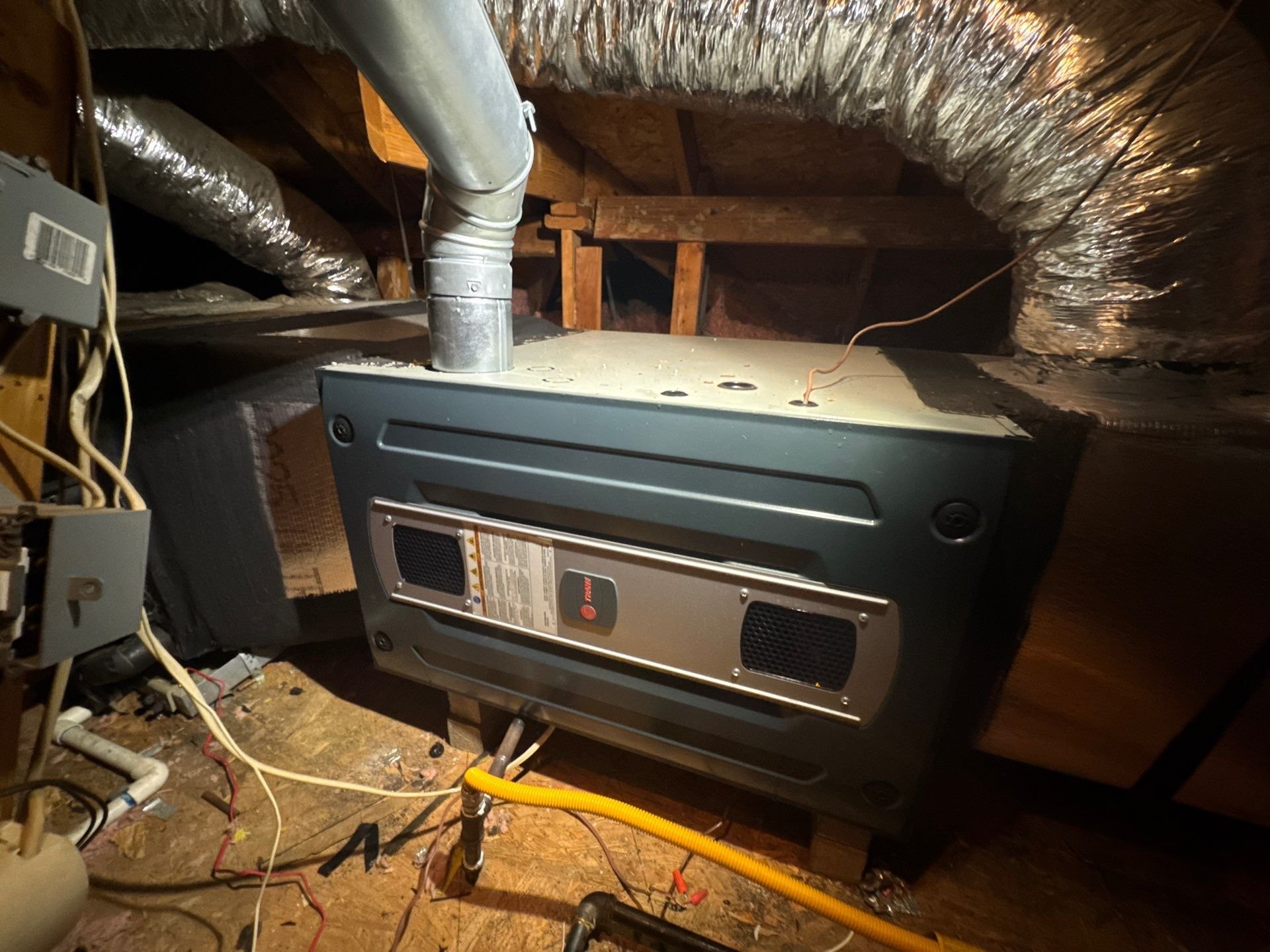
Gas furnace in the house? Test the carbon monoxide alarms and put fresh batteries in them the same day you test the heat. Furnaces burn fuel and send the exhaust up a flue. Combustion and the safety controls are for a tech to check. That part isn't a DIY job.
A lot of heat pumps around Houston lean on electric heat strips on the coldest nights. Have those checked before the first front. Heat pumps frost up a little sometimes and clear it on their own. That's fine. An outdoor unit that's iced solid needs a technician, not a garden hose.
Not sure which one you have, or thinking about switching? Read gas vs. electric heat for Houston homes.
5. The first-heat smell, normal or not
The first time the heat comes on, you'll probably smell something faint, dusty, a little burnt. That's normal. It's dust cooking off parts that sat all summer, and it should be gone within an hour or two of runtime. Open a window and let it go.
Sharp and electrical, or like melting plastic? Different story. Shut the system off and call. A musty, dirty-socks odor usually points to moisture on a coil or a drain problem. There's more on why your heater smells the first time you turn it on.
When to stop and call
Skip the troubleshooting and call us if you run into any of these.
- Only cold air, even after the system has been running a while
- The system won't start, or it starts and shuts right back off
- A breaker that trips more than once (reset it once, not over and over)
- A sharp electrical, burning-plastic or melting smell
- A heat pump outdoor unit that's iced solid
- A sulfur or rotten-egg smell. Leave the house, call the gas utility, then call us
You can reach us at (832) 589-0813. We're open 24 hours Monday through Saturday and closed on Sunday. There's more on how those calls go on our heating and furnace repair page.
A fall tune-up, and where Velocity Care fits
This checklist covers what you can see from the hallway. A technician looks at the parts you can't. Don't want to have to remember every year? Velocity Care seasonal visits put a spring cooling visit and a fall heating visit on the calendar for you. Members also get a photo checklist, repair discounts and priority scheduling during normal hours.
The same checklist applies if you're up in The Woodlands or Conroe. The town pages cover the rest of what we do there.
FAQ
When should I switch my thermostat from cool to heat in Houston?
There's no set date around here. Test the heat on a mild day before the first cold front, then switch to HEAT once the house starts feeling cold at night. You may still want the AC on some fall afternoons.
Why does my heater smell like burning the first time I turn it on?
Usually it's dust that settled on the heating parts over the summer burning off. It should be faint and fade within an hour or two of runtime. If it's sharp and electrical, or smells like something melting, shut it off and call. Rotten eggs means get out of the house, call the gas utility, then call us.
How do I test my heater before it gets cold?
On a mild day, put in a fresh filter, switch the thermostat to HEAT and set it 3–5° above room temperature. You should get warm air, normal sounds and a normal shut-off once the house reaches the setting.
Do heat pumps need anything special before winter?
Keep the outdoor unit clear of leaves and debris, because it does the heating too. Many Houston heat pumps use electric heat strips as backup, and a fall visit is a good time to have those checked. If the outdoor unit is ever iced solid, call a technician.
Do I really need a fall HVAC tune-up in Houston?
Your heater sits there doing nothing for most of the year. That's when small problems get a head start. A fall visit lets a technician find them before the first cold front, and a gas furnace should have its combustion and safety controls checked by a pro. Velocity Care members get a fall heating visit as one of their two scheduled visits a year.
What are signs I should call instead of troubleshooting?
Cold air with no heat, a system that won't start or shuts right back off, a breaker that trips more than once, a sharp electrical or melting smell, or a heat pump outdoor unit that's iced solid. If you smell sulfur or rotten eggs, leave the house, call the gas utility, then call us.
From all of us at Velocity Air A/C & Heating